Toros Roslin: The Greatest Master of Medieval Armenian Miniature and Most Prominent Representative of the Cilician School
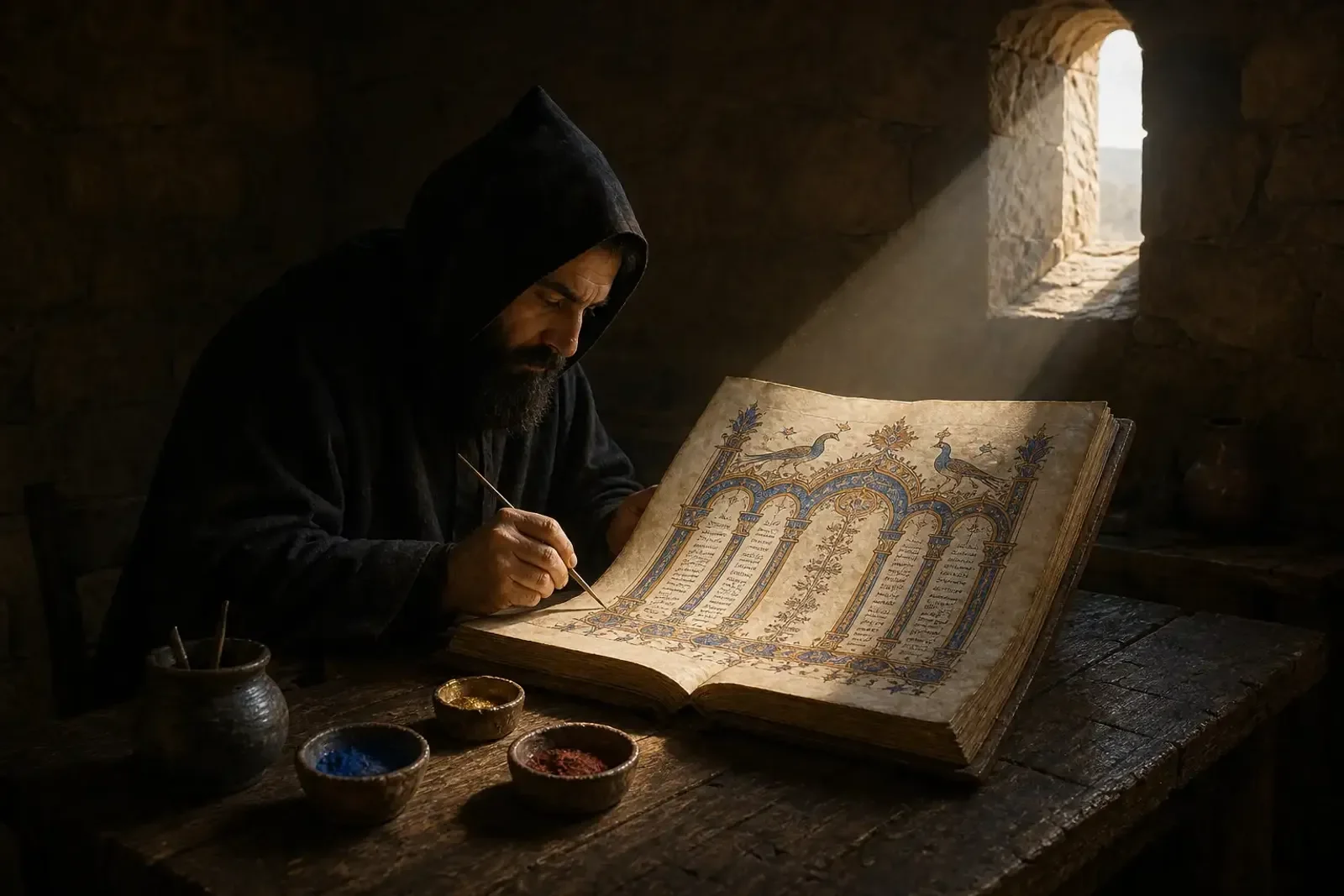
Toros Roslin, who lived and created in the thirteenth century, stands as one of the brightest figures of Armenian culture and a magnificent artist of global scale. Precise documentary data regarding his life and career remain scarce, as the destruction of the state archives of the Armenian Kingdom of Cilicia deprived historians of many important records. Nevertheless, his name is forever preserved in the colophons of seven surviving illuminated manuscripts signed by the master himself, created between the years twelve fifty-six and twelve sixty-eight. Roslin worked in the scriptorium at the patriarchal see in the fortress of Hromkla, where his talent enjoyed the high patronage of the Armenian Catholicos Constantine the First and the royal family of Cilicia. Roslin's art brought a true revolution to medieval miniature painting and foreshadowed the beginning of the Armenian Renaissance. He infused traditional religious scenes with unprecedented liveliness, psychological depth, and a rich palette of human emotions. The master's uniqueness manifested in the dynamic rendering of human bodies, the expressiveness of faces, and the elegant execution of drapery folds, which was an absolute novelty for that era. Among his works, the Zeytun Gospels, the Malatia Gospels, and the Sebastia Gospels are particularly famous, in which the harmony of colors, the virtuoso use of gold, and complex ornamental compositions reach perfection. While being a deeply national artist, he was simultaneousl