Sheram
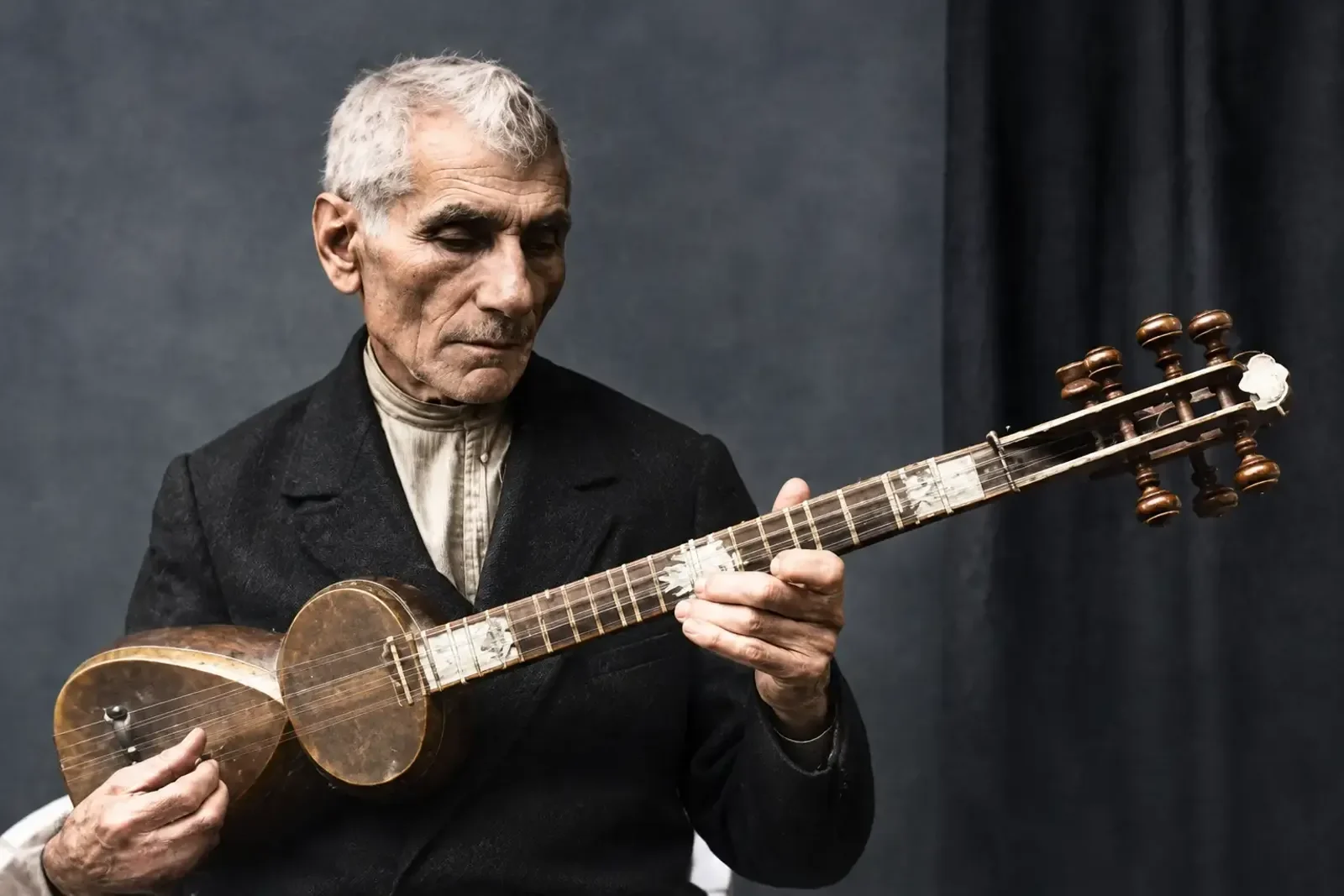
Grigor Talyan, famously known by his literary and musical pseudonym Sheram, was one of the most prominent figures of late nineteenth and early twentieth century Armenian music, a founding father of the new Armenian ashugh school, a poet, and a composer. He fundamentally reformed the Armenian ashugh art, liberating it from traditional Middle Eastern influences and creating a distinctive, purely national lyrical and melodic style. Characterized by folk simplicity and refined psychological sincerity, Sheram compositions became an essential part of the Armenian cultural heritage, performed across Armenian communities worldwide. Sheram was born on March 20, 1857, in historic Alexandropol, present-day Gyumri, which stood at that time as a major center of Armenian culture and craftsmanship. Having lost his father at an early age, he was forced to interrupt his education and work as a tailor apprentice, where he gained firsthand familiarity with the daily lives and songs of Gyumri master craftsmen. At the age of eleven, he crafted his first saz and began to play and compose songs independently. Soon, his extraordinary musical talent caught the attention of the celebrated ashugh Jivani, who bestowed upon the young singer the title Sheram, meaning silkworm, on account of his smooth and silky melodies. The musical and literary path of Sheram was marked by the revival of the Armenian ashugh song. He composed hundreds of love, lyrical, and patriotic songs, writing both the poetic verses a