Nahapet Kuchak
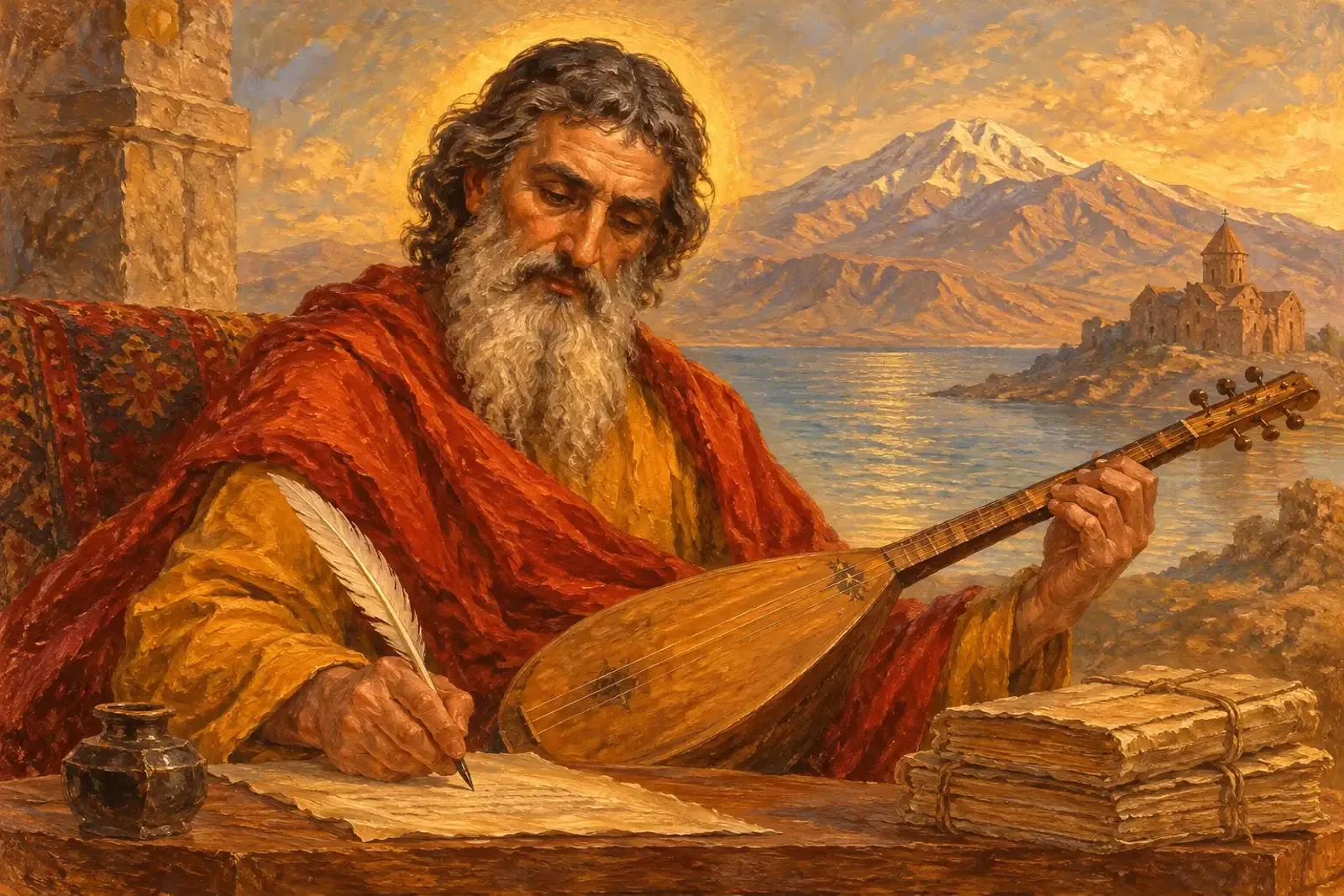
Nahapet Kuchak was one of the foremost figures of sixteenth-century Armenian medieval lyric poetry, recognized as one of the earliest Armenian ashugh minstrels and a poet closely associated with the legacy of hayrens, the celebrated gems of Armenian folk-gusan verse. Over the centuries, his name became a collective emblem of medieval Armenian secular poetry, celebrating earthly love, human emotion, the beauty of nature, the sorrow of exile, and philosophical reflections on life. Biographical details concerning Nahapet Kuchak's life are scarce and have survived primarily through folk traditions, manuscript colophons, and the inscription on his tombstone. He is believed to have been born in the late fifteenth century, around the early fourteen-nineties, in the village of Kharakonis in the province of Van. In the memory of his contemporaries and subsequent generations, he endured as a beloved and revered poet-minstrel, earning the honorific title Master Nahapet. According to oral tradition and surviving records, Kuchak lived for approximately one hundred years, traveling across Armenian settlements with his songs and earning widespread popular affection. Around a dozen love, religious, and moralizing ashugh songs have been preserved under his name through written and oral transmission. Furthermore, beginning in the late nineteenth century with the publication of Aristakes Tevkants's anthology Hayerg in 1882, hundreds of medieval hayrens were attributed to him, establishing Nahap