Armenian Lavash
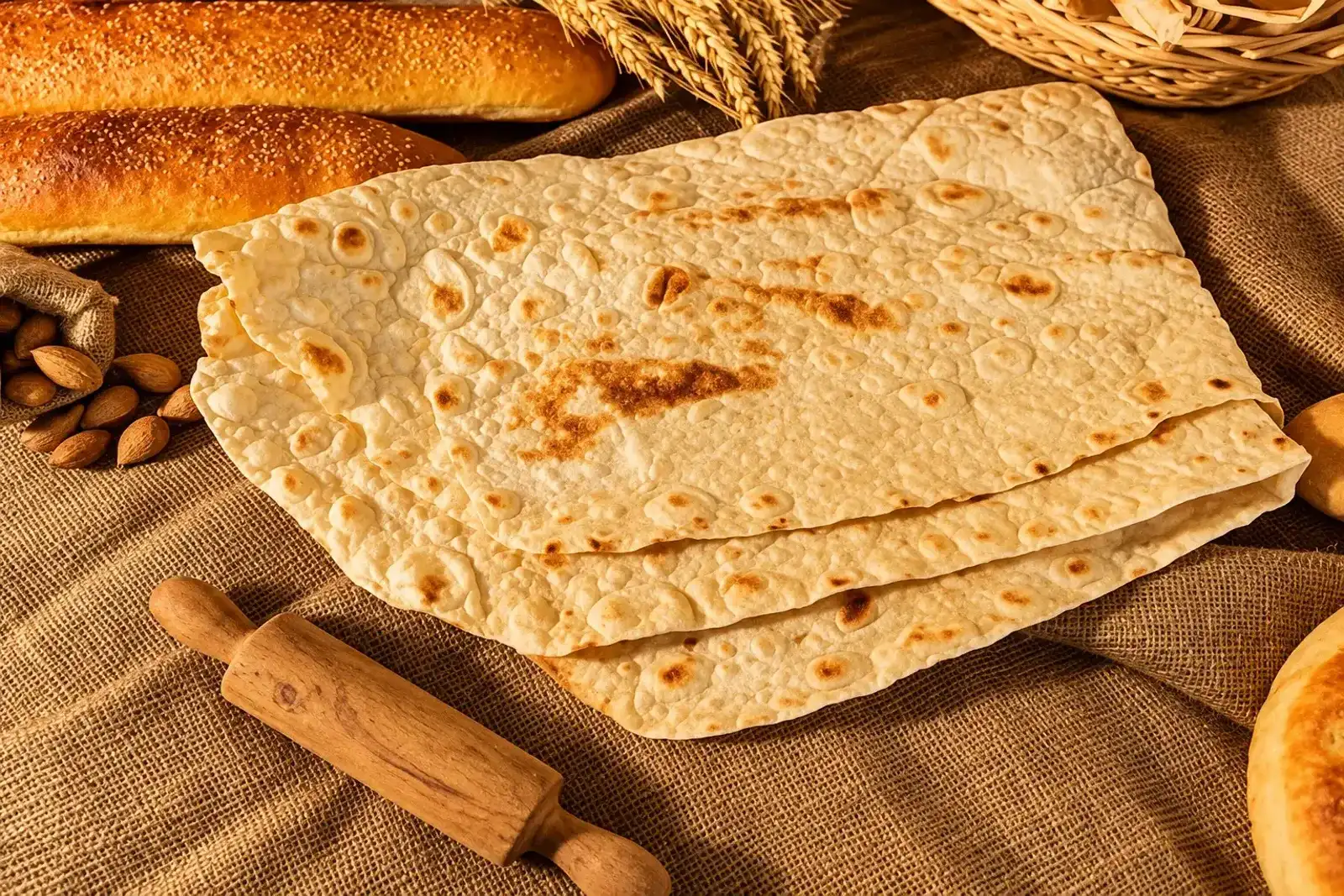
Armenian lavash is a thin unleavened flatbread with ancient traditional roots, made without yeast. It is one of the most important elements of Armenian cuisine and national identity. In 2014, the tradition of making lavash, its meaning and cultural expressions were inscribed on UNESCO's Representative List of the Intangible Cultural Heritage of Humanity. Making lavash follows clear rules and is traditionally a collective, community activity, carried out mainly by women. The ingredients are simple: wheat flour, water and salt, while a ball of dough kept from the previous baking serves as the starter. After kneading and shaping into balls, the dough is rolled out thin with a rolling pin, then tossed in the air from hand to hand to stretch it further, and spread over a special oval cushion called a gushat (or bazman). Lavash is baked in a clay oven dug into the ground, the tonir: using the gushat, the dough is slapped onto its hot wall with a deft strike. Thanks to its thinness and the high temperature of the tonir, the bread bakes in just half a minute to a minute. The main technological feature of lavash is its durability and exceptional keeping quality. After baking, lavash is cooled, stacked and dried. Dried, it can be stored for months without losing its qualities. Before eating, the dried bread is lightly sprinkled with water and covered with a cloth, and after a few minutes it becomes soft and supple again. In ancient times this property had great strategic and economic i