Sergei Parajanov
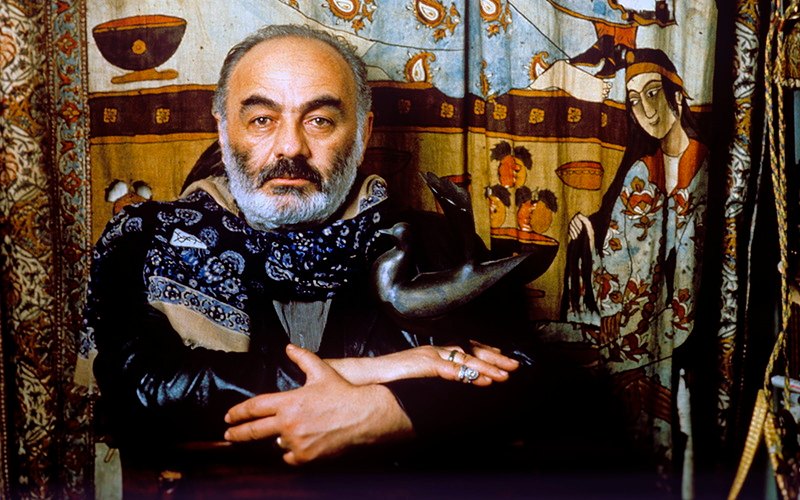
In the history of twentieth-century global cinematography, Sergei Parajanov remains one of the most distinctive, daring, and irreplaceable figures. Born in 1924 in Tbilisi to an Armenian family, he managed to revolutionize the art of cinema by developing a completely new poetic visual language. Parajanov's art represents a magnificent fusion of diverse Caucasian cultures, national traditions, and universal spiritual values. He was far more than a film director, he was an artist, a master of collage, and a philosopher for whom freedom and beauty stood as the primary purposes of life. The beginning of Parajanov's global acclaim was marked by the film Shadows of Forgotten Ancestors, dedicated to the life and culture of the Ukrainian Hutsuls. This cinematic canvas stunned the international film community with its extraordinary color solutions, dynamics, and ethnic depth. However, the ultimate pinnacle of his directorial genius was the masterpiece The Color of Pomegranates, dedicated to the great troubadour Sayat-Nova. This film is not a conventional biographical narrative, but rather a sequence of poetic collages and symbols where every single frame resembles an independent painting. It became one of the most influential and discussed works in cinema history. The life of this artist, characterized by his love of freedom and non-conformity to Soviet ideology, was filled with persecution. Due to his political views and artistic independence, Parajanov spent years in prisons and lab