Jivani
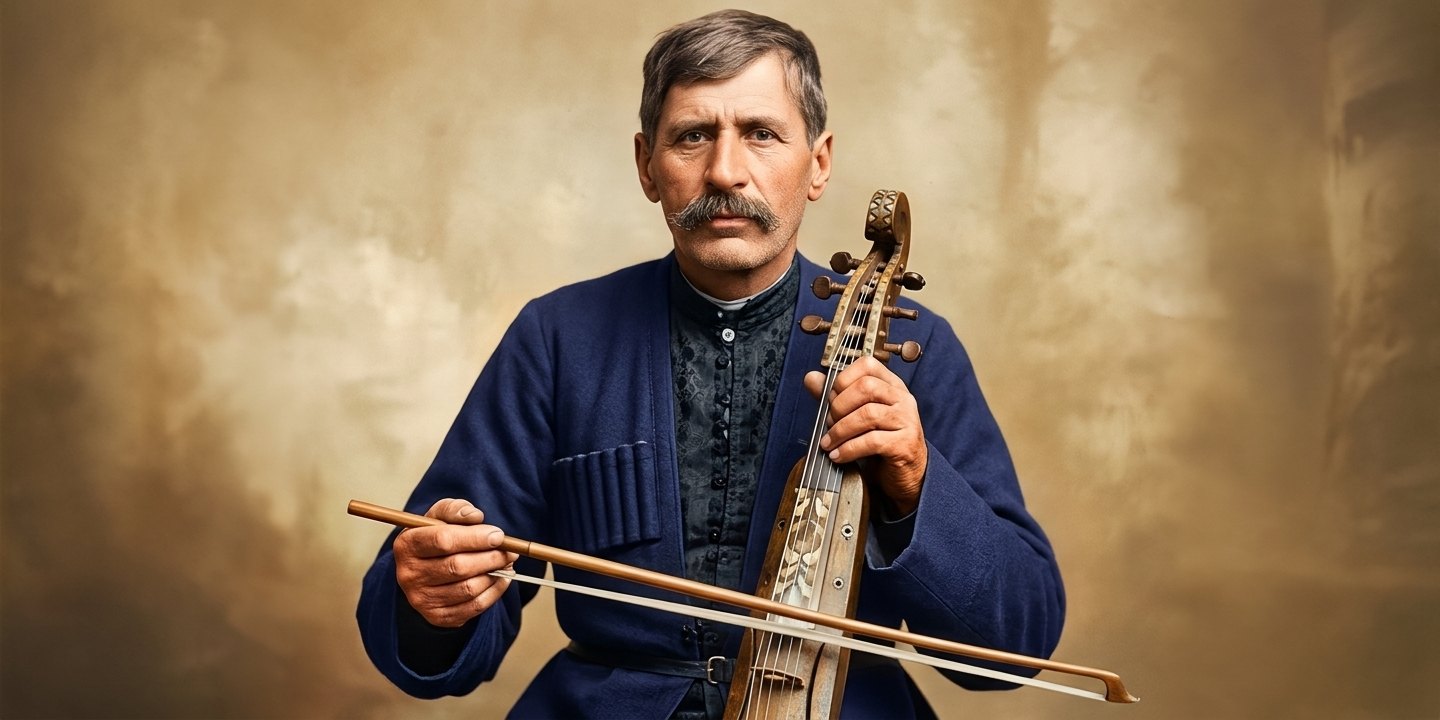
Ashugh Jivani, born Serovbe Stepani Levonian, was born in 1846 in the Armenian-populated village of Kartsakhi, located near the town of Akhalkalaki in Javakheti. At the age of eight, he was left an orphan and was raised in his uncle's family. During his childhood, he became an apprentice to the prominent local master Ghara-Ghazar, who taught the boy the traditions of Armenian folk singing as well as how to play the kamancha and the violin. In 1866, the young Serovbe, along with the ashugh Sazayi, moved to Tiflis, where his professional musical career began and where he received his famous artistic name, Jivani. The most prolific period of his life and creative career is associated with Alexandropol, modern-day Gyumri, where he lived and worked from 1868 to 1895. There, he led the local society of ashughs and was honored with the title of ustabashi, the master of masters, making him one of the central figures of the city's cultural life. Jivani founded a new national school of ashugh art, which moved away from traditional Middle Eastern Persian and Turkish influences and anchored itself in pure Armenian folk music and literary language. He authored around 800 surviving songs and thousands of poems, including such famous masterpieces as Unfortunate Days, The Crane, Noble Friend, and Mother. In 1895, Jivani returned to Tiflis with his family, from where he continued his concert tours across the Southern and Northern Caucasus, as well as Russia. The notation and arrangement of hi