Askaryan Effect
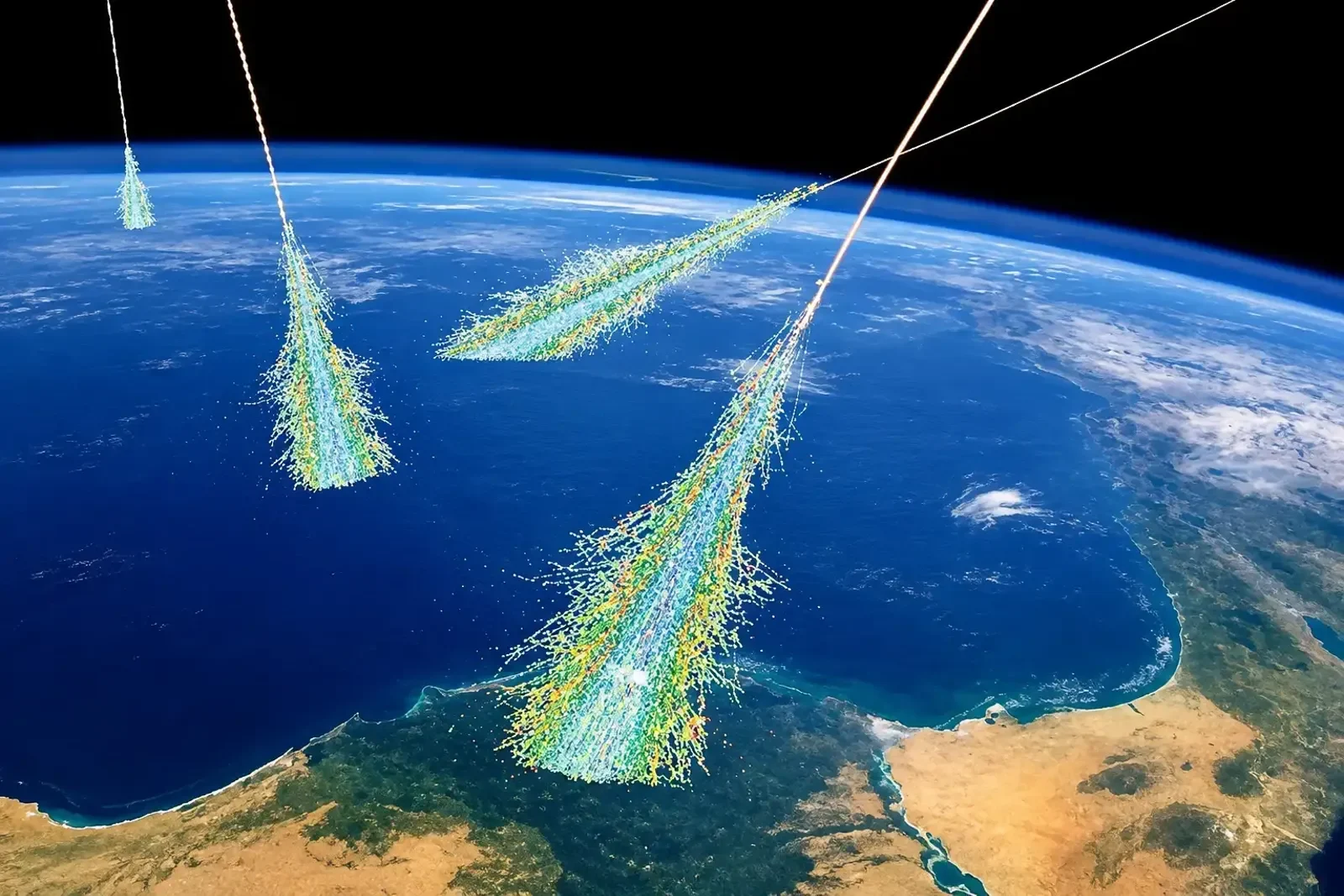
The Askaryan effect is one of the most significant physical phenomena in contemporary high-energy physics and neutrino astrophysics, the discovery of which held fundamental importance for detecting ultra-high-energy cosmic particles. The phenomenon is named in honor of the eminent Armenian physicist Gurgen Askaryan, who theoretically predicted and substantiated it in nineteen hundred and sixty-two. This effect describes the powerful coherent radio emission generated when a shower of high-energy elementary particles travels through a dense dielectric medium, a process similar in nature to Cherenkov radiation, yet manifesting in the radio and microwave bands of the electromagnetic spectrum. The physical essence of the phenomenon stems from the emergence of a charge imbalance among particles in the medium. When an ultra-high-energy cosmic particle, such as a neutrino or a cosmic ray, penetrates a dense dielectric medium like the Antarctic ice sheet, rock salt deposits, sand, or lunar regolith, it collides with atoms of the medium and initiates a cascade shower of secondary elementary particles. During this process, numerous electrons are knocked free from the atoms of the medium, while positrons annihilate upon colliding with ambient electrons. Consequently, a substantial excess of negative electric charge develops within the particle shower, moving faster than the phase velocity of light in that medium and emitting a brief, intense electromagnetic pulse. Because the geometric d