Arshile Gorky
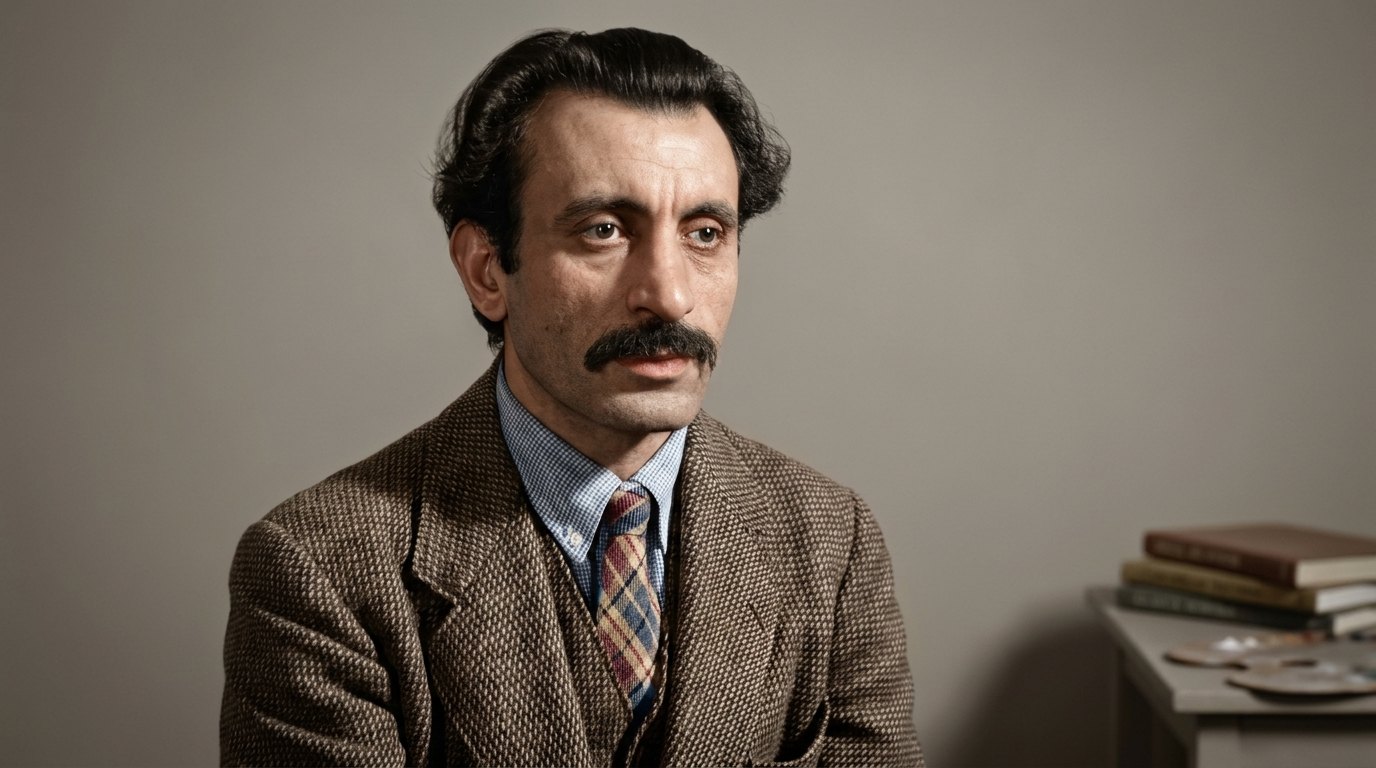
Arshile Gorky, born Vosdanik Sedraki Adoian, was born on April 15, 1904, in the village of Khorkom in the Van Vilayet, which was part of the Ottoman Empire during those years. His childhood was closely bound to his native nature, art, and traditional lifestyle, but it was abruptly interrupted by the horrors of the Genocide. In 1915, along with his family, he was forced to flee to Eastern Armenia. Due to severe deprivations, his mother died of starvation in Yerevan in 1919, which became the greatest psychological blow in the future artist's life and left an indelible mark on his entire body of work. In 1920, he moved to the United States of America, where he assumed the artistic pseudonym Arshile Gorky. In America, Gorky began to independently and consistently study the development stages of world painting. In his initial period, he was influenced by the styles of Paul Cezanne, Pablo Picasso, and Joan Miro, gradually transitioning toward the formation of his own individual artistic style. He stands as one of the most pivotal figures in twentieth-century American and global fine arts, serving as a direct bridge between European Surrealism and American Abstract Expressionism. Among his celebrated canvases are The Artist and His Mother, Water of the Flowery Mill, How My Mother's Embroidered Apron Unfolds, and The Liver Is the Cock's Comb. Within his art, the colors of Lake Van, his native landscape, and childhood memories constantly revived through abstract imagery. The final yea