Aram Khachaturian
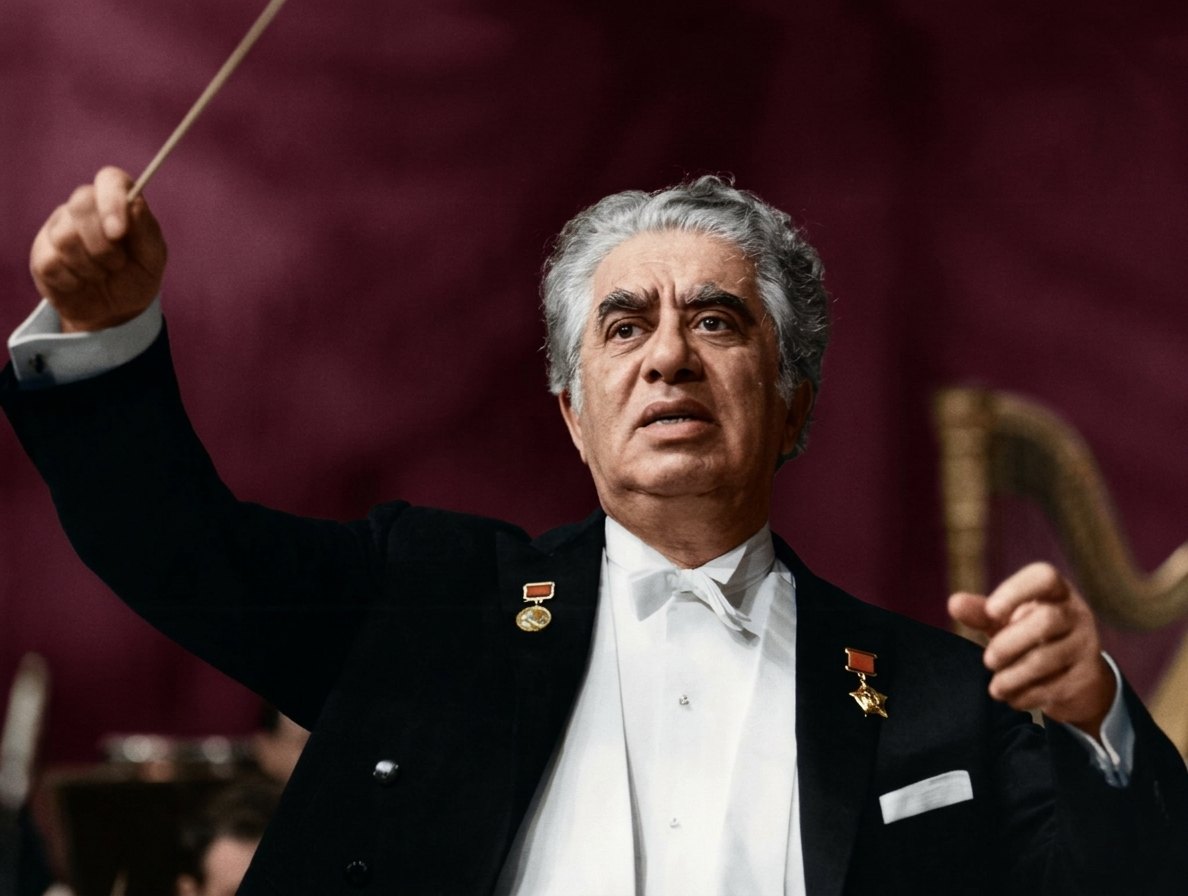
Aram Ilyich Khachaturian was born on June 6, 1903, in a suburb of Tiflis into the family of a bookbinder. His ancestors hailed from the historical region of Nakhichevan. In his childhood, Aram showed a keen interest in music and played in a brass band, but he began his systematic musical education at a relatively late age. In 1921, he moved to Moscow and entered the biological department of the university, but soon left it to enroll at the Gnessin Music School in the cello and composition classes. In 1929, he entered the Moscow Conservatory, graduating with honors. His creative rise began in the 1930s, when his First Symphony and Piano Concerto brought the young composer widespread international recognition. Khachaturian stands as one of the most pivotal figures in twentieth-century world music, seamlessly blending the rich traditions of Eastern folklore with the canons of Western European classical polyphony. His masterpieces include the ballets Gayane and Spartacus, with the Sabre Dance from the former becoming one of the most famous and frequently performed musical pieces worldwide. He is also the author of the Violin Concerto, three symphonies, and numerous scores for films and theatrical productions, including the brilliant waltz for the drama Masquerade. Throughout his prolific career, Aram Khachaturian was honored with the title of People's Artist of the USSR, the Lenin Prize, and numerous State Prizes, and was elected a member of several foreign academies. He taught f